
Nationwide Fuel Price Strike Brings Kenya’s Transport System to a Standstill
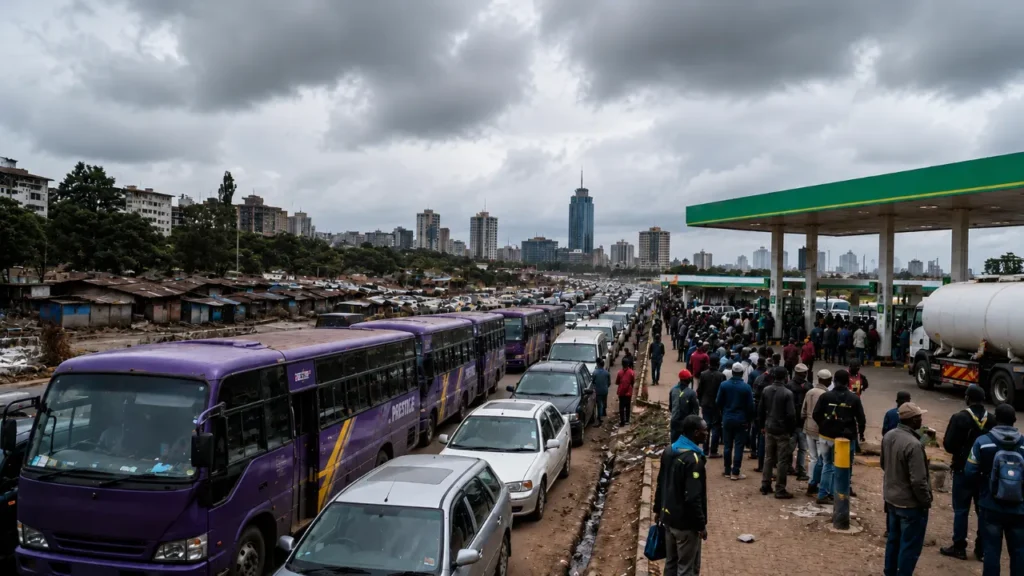
Kenya faced major disruption on Monday after public transport operators launched a nationwide strike against soaring fuel prices, leaving thousands of commuters stranded and slowing business activity across the country.
Large sections of the capital, Nairobi, experienced unusually quiet streets as buses, minibuses, and trucks stayed off the roads in protest. Many workers were forced to walk long distances to their workplaces while some businesses temporarily shut down due to transportation difficulties. Several schools also advised students to remain at home amid growing concerns about safety and mobility.
Television footage from different parts of the country showed protesters blocking roads with stones, burning tyres, and gathering at major intersections. In some areas, tensions escalated as demonstrators clashed with police officers who responded with tear gas to disperse crowds.
Fuel Prices Reach Historic Highs
The nationwide strike comes only days after Kenyan authorities approved another sharp increase in petroleum prices. Fuel costs rose by more than 20%, pushing diesel and petrol prices to record levels and triggering public anger over the rising cost of living.
Kenya’s Energy and Petroleum Regulatory Authority announced last week that diesel and petrol prices had climbed to around 242 Kenyan shillings per litre, one of the highest fuel prices the country has experienced in recent years.
The sudden increase has heavily affected transportation operators, many of whom say operating vehicles has become financially impossible. Public transport fares have already increased in several cities, adding more pressure on ordinary citizens already struggling with expensive food, rent, and daily essentials.
Global Conflict Affecting Fuel Supplies
Kenya depends heavily on imported fuel supplies from Gulf countries. Officials and analysts say international tensions have significantly disrupted supply chains and contributed to the current crisis.
The ongoing conflict involving the United States, Israel, and Iran has caused instability in global energy markets since fighting escalated earlier this year. Although a ceasefire was later announced, shipping routes remain uncertain because of disruptions around the Strait of Hormuz, one of the world’s most important oil transport corridors.
Nearly one-fifth of global oil shipments pass through the narrow waterway, and continued disruptions there have pushed fuel prices higher in many countries, including across Africa.
Transport Operators Demand Government Action
The Transport Sector Alliance, which represents public transport operators and truck drivers, urged all motorists — including private vehicle owners — to join the coordinated shutdown.
In a public statement, the alliance described the protest as a national issue affecting every Kenyan citizen, not only transport workers.
The group accused the government of failing to protect the public from rising fuel costs and worsening economic hardship. Protest leaders are demanding that authorities immediately reverse the latest fuel price increases and reduce prices by approximately 35%.
According to transport operators, high fuel prices have made it impossible for many businesses to survive. Truck drivers, bus operators, and taxi services say they are struggling to cover operational costs while commuters complain about sharply rising transport fares.
Police Deployed Across Major Cities
Ahead of the demonstrations, Kenyan police announced that security forces would be deployed throughout Nairobi and other urban centres to maintain order. Authorities warned protesters against engaging in violence or blocking roads.
Despite the warning, several confrontations were reported during the day. In parts of Nairobi and other towns, protesters allegedly stopped vehicles and harassed motorists attempting to continue traveling.
Emergency crews and police units remained stationed near government offices, transport hubs, and key highways as officials monitored the evolving situation.
Government Defends Fuel Increase
Kenya’s Treasury Minister John Mbadi acknowledged that the sharp rise in fuel prices was hurting businesses and households across the country. Speaking to local media, he described the situation as “unfortunate” but argued that the government was dealing with a global economic challenge beyond its direct control.
Mbadi criticized the nationwide strike, calling it unnecessary and emotionally driven. He said government decisions regarding fuel pricing must be based on economic realities rather than public pressure.
“Why are we trying to solve a global problem using domestic means?” the minister asked during a television interview.
Government officials insist that international market conditions, currency pressures, and supply disruptions are major factors behind the increase in fuel costs.
Cost-of-Living Crisis Deepens
The fuel crisis has intensified public frustration over Kenya’s broader economic challenges. Rising transportation costs are already increasing the price of food, household goods, and other essential services.
Many Kenyans say the continued increases are becoming unsustainable, especially for low-income families that rely heavily on public transport and affordable food supplies.
Economic analysts warn that if fuel prices remain high for an extended period, inflation could worsen further, increasing pressure on both businesses and consumers.
As protests continued across parts of the country, uncertainty remained over how long the transport shutdown would last and whether the government would agree to negotiations with transport unions and industry leaders.