
Trump Heads to Iowa as Republicans Battle to Hold Seats in Longtime Stronghold
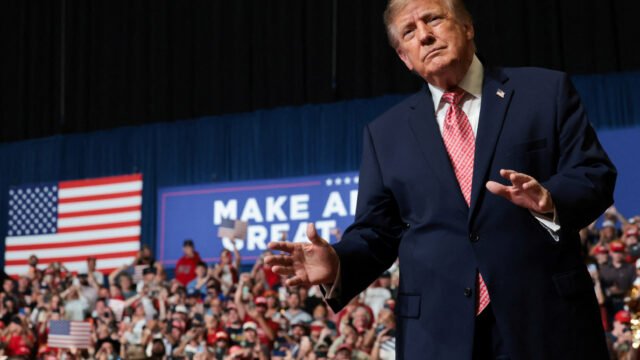
U.S. President Donald Trump is heading to Iowa on Thursday to strengthen Republican support in a state he won by 13 percentage points in the 2024 presidential election. However, declining approval ratings and growing voter concerns about the economy and his administration’s policies have complicated the party’s position ahead of the November 3 midterm elections.Trump is scheduled to hold a rally in Sioux City as Republicans work to defend a Senate seat, three House districts and the governor’s office. The contests have increased the political importance of Iowa, a state that has supported Republicans in recent elections but where voter concerns could create opportunities for Democrats.The president’s visit comes at a critical point in the midterm campaign, as candidates from both parties seek to persuade voters that their policies will address economic pressures and other issues affecting households across the country.IOWA EMERGES AS A KEY BATTLEGROUND FOR REPUBLICANSIowa has become an important state in the national political landscape, particularly for Republicans seeking to maintain their congressional and statewide representation.Trump won Iowa by 13 percentage points in 2024, demonstrating substantial support for his presidential campaign. That result helped reinforce the state’s reputation as a Republican stronghold.However, presidential election results do not necessarily determine the outcome of subsequent congressional and statewide contests. Midterm elections often involve different candidates, local concerns and levels of voter participation.Republicans must now defend several important positions simultaneously. The party is seeking to retain a Senate seat, maintain control of three House districts and protect the governor’s office.The combination of these races means that the election could have consequences beyond any single contest. The results will help determine the balance of political representation in Iowa and could contribute to the broader national struggle between Republicans and Democrats.Trump’s appearance in Sioux City gives the president an opportunity to campaign directly for his party’s candidates, encourage supporters to participate in the election and emphasize the issues Republicans want voters to prioritize.For Democrats, the races offer an opportunity to challenge Republican candidates by focusing on economic conditions, the administration’s policies and voters’ concerns about the direction of the country.ECONOMIC CONCERNS BECOME A CENTRAL CAMPAIGN ISSUEEconomic conditions are emerging as an important issue for Iowa voters ahead of the November election.According to a Marist poll cited by Reuters, 42% of likely Iowa voters said their financial situation had worsened over the previous year.The finding highlights concerns about household finances at a time when candidates are attempting to convince voters that their economic policies will improve living standards.Financial pressures can influence how voters evaluate an administration, particularly when households believe their incomes are not keeping pace with expenses or that their overall financial security has deteriorated.For Republicans, the challenge is to demonstrate that the administration’s policies are delivering, or will deliver, tangible benefits to ordinary Americans. The party must also persuade voters that its candidates can respond effectively to concerns about the cost of living and economic security.Democrats, meanwhile, have an opportunity to make household finances a central part of their campaigns. Candidates can use voters’ experiences to question the effectiveness of Republican economic policies and present alternative approaches.Nevertheless, the poll finding alone does not establish how voters will ultimately cast their ballots. Economic concerns are only one factor influencing electoral decisions, alongside candidate performance, party loyalty, local issues and other political considerations.TRUMP’S APPROVAL RATING FACES PRESSURETrump is entering the Iowa campaign amid evidence of weakening public approval.A Reuters/Ipsos poll cited in the report put his approval rating at 31%, described as the lowest level of either of his presidential terms.Approval ratings are an important measure of public opinion because they provide an indication of how voters assess a president’s performance. However, they do not directly translate into votes for individual candidates.A president’s standing can influence congressional races, particularly when candidates from the president’s party are closely associated with the administration’s record.Republican candidates in Iowa must balance the benefits of campaigning alongside a president who has a strong political relationship with much of the party’s base against the potential difficulties associated with declining approval among the wider electorate.Trump’s visit provides an opportunity to reinforce support among Republican voters. A rally can also help draw attention to the party’s campaign messages and encourage supporters to become more involved in local races.At the same time, the president’s public standing could become an issue that Democratic candidates use to challenge Republicans in competitive districts.The significance of the approval figure will depend on how it compares with opinion among Iowa voters specifically, how attitudes change during the campaign and whether dissatisfaction with the president affects voting decisions in individual races.REPUBLICANS DEFEND SENATE, HOUSE AND GOVERNOR’S OFFICEThe Iowa contests involve several different levels of government, making the state particularly relevant to both parties ahead of Election Day.Republicans are defending one Senate seat, three House districts and the governor’s office. Each contest has its own candidates, local issues and electoral dynamics.Senate raceThe Senate contest is important because control of the chamber can affect the federal legislative agenda, including consideration of legislation, government appointments and other national priorities.For Republicans, retaining the seat would help protect the party’s representation in the Senate. Democrats have an opportunity to challenge the incumbent party by emphasizing economic concerns and their disagreements with the administration.The result will depend on the candidates’ campaigns and the priorities of voters participating in the election.Three House districtsRepublicans are also defending three congressional districts.House races can be particularly sensitive to local conditions because voters evaluate candidates on both national political issues and concerns specific to their communities.Candidates may emphasize economic performance, federal spending, immigration, healthcare and other matters, depending on the priorities of their constituents.The three districts also illustrate why a state’s presidential voting pattern does not automatically determine every congressional outcome. Different districts can produce different electoral results even when they are located within the same state.Governor’s officeThe gubernatorial contest adds another important dimension to the campaign.A governor has responsibilities that differ from those of federal lawmakers, including overseeing state government and implementing state-level policies.Voters may therefore consider issues specific to Iowa when deciding which gubernatorial candidate to support. These may include state finances, education, public services and economic development.The outcome will help shape the state’s political leadership beyond the federal contests.DEMOCRATS SEE AN OPPORTUNITY TO CHALLENGE REPUBLICAN STRENGTHThe combination of economic anxiety and concerns about Trump’s approval rating has created an opening for Democrats to contest races in a state that has supported Republicans in recent presidential elections.Democratic candidates can seek to persuade voters that the economic conditions they are experiencing require a change in political leadership or a different policy approach.They may also attempt to distinguish their positions on national issues from those of the Trump administration.However, a potential opportunity does not guarantee electoral success. Democrats must still build effective campaigns, attract support from voters beyond their established base and convince undecided voters that their candidates can address the issues that matter most to them.Republicans, for their part, can point to their previous electoral support in Iowa and seek to maintain the coalition that helped Trump win the state in 2024.The campaign will test whether that support remains strong in the midterm environment and whether national political concerns influence voters in the same way across the Senate, House and gubernatorial races.WHY TRUMP’S IOWA RALLY MATTERSPresidential campaign appearances can serve several purposes during midterm elections.First, they can energize a party’s supporters. Large rallies offer candidates an opportunity to communicate their central messages and encourage supporters to participate in the electoral process.Second, a president can use campaign appearances to draw national attention to local contests. That attention may help candidates attract media coverage, raise the visibility of their campaigns and reinforce their association with the party’s national leadership.Third, rallies provide a platform for addressing criticism and presenting the administration’s account of its record.Trump’s appearance in Sioux City brings these considerations together as Republicans prepare to defend multiple positions in Iowa.The event also places the president in a state where his 2024 electoral performance provides a clear benchmark against which the party’s current political position can be assessed. The central question is not simply whether Trump previously won Iowa, but whether Republican candidates can maintain sufficient support in a midterm election with different candidates and potentially different voter priorities.THE BROADER NATIONAL IMPLICATIONSThe November 3 midterm elections will be an important test of the political environment facing the Trump administration and both major parties.Midterm elections frequently become opportunities for voters to express their views on the president’s performance. However, results also depend on local races, candidate quality, campaign organization and the particular issues dominating each contest.For Republicans, defending the Iowa Senate seat and House districts is part of the wider effort to preserve their congressional representation. The governor’s race adds a state-level contest that could influence Iowa’s political direction.For Democrats, challenging Republicans in Iowa would represent an opportunity to compete in a state where Trump recorded a substantial victory in the previous presidential election.The economic findings cited in the Marist poll and the approval rating reported by Reuters/Ipsos provide context for the campaign, but neither figure independently establishes how the races will turn out.Voters’ views may change as the campaigns progress, and the importance of national issues may vary between individual contests.WHAT TO WATCH BEFORE ELECTION DAYSeveral developments will be important to follow as the Iowa campaigns approach November 3.Economic sentiment: Whether voters continue to report worsening household finances and how candidates respond to those concerns.Trump’s public approval: Whether his approval rating changes and how candidates from his party address his administration’s record.Republican turnout: Whether the party can mobilize the voters who supported Trump in 2024.Democratic outreach: Whether Democratic candidates can expand their support by focusing on economic concerns and other voter priorities.Individual race dynamics: Whether local issues and candidate-specific factors influence the Senate, House and gubernatorial contests differently.These factors will help define the campaign, although their effects cannot be determined from the available polling figures alone.CONCLUSIONTrump’s visit to Sioux City underscores the importance Republicans are placing on Iowa ahead of the November 3, 2026, midterm elections.The president won the state by 13 percentage points in 2024, but the upcoming contests present a different political test. Republicans must defend a Senate seat, three House districts and the governor’s office amid concerns about household finances and a reported decline in Trump’s approval rating.The Marist poll’s finding that 42% of likely Iowa voters believe their financial situation has worsened over the past year highlights an economic issue that could shape the campaign. Meanwhile, the Reuters/Ipsos approval figure of 31% provides further context for the political challenges facing the president.Trump’s rally gives Republicans an opportunity to reinforce their message and mobilize supporters. Democrats, meanwhile, are seeking to turn voter concerns into greater electoral competition.The outcome remains uncertain. The November election will show how Iowa voters assess the economy, the president’s performance and the candidates competing for state and federal offices.Source: Reuters, October 22, 2026. This article is a rewritten version of the information supplied by the user; additional details, statements and polling results have not been independently verified.